

wintering
reflections on seasons and cycles

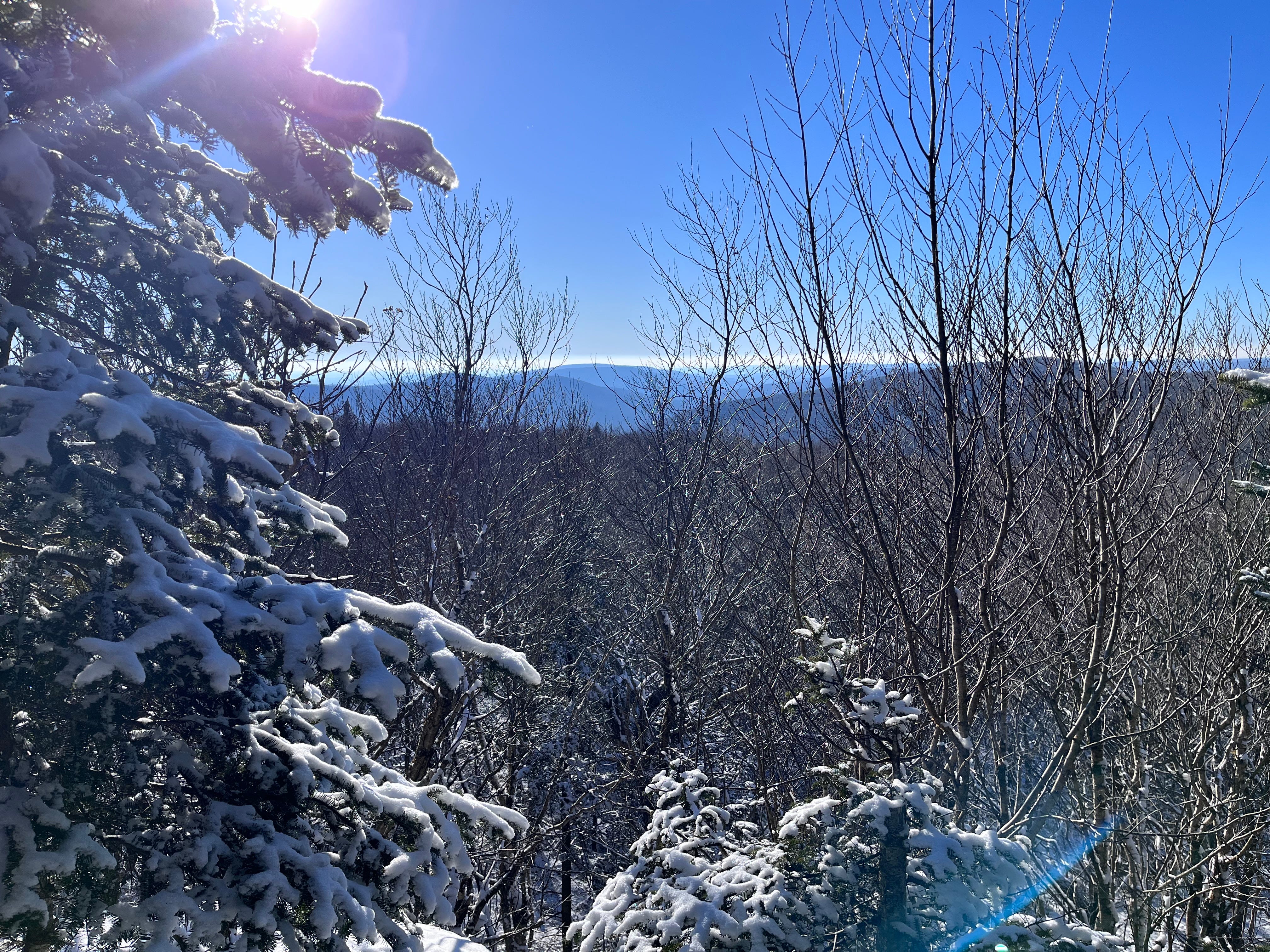
It feels like I am on the edge of a cliff. I was meant to be here, yet resistance boils up from my core and I teeter at the precipice, hoping that at some point I will realize that I should walk away from the edge and continue my path on solid, sure ground. Ground where I will feel safe, stable, comfortable, familiar. But no matter how much time passes, I don’t have this realization. In fact, the only thing I feel increasingly aware of is that at some point, I will have to jump, but the idea fills me up with anxiety. So, in my imagination, I pretend this is not a requirement of me. In my mind, there is a warm, dark womb where I can curl up and put distance between what’s expected of me and what I feel like I’m capable of.
With each year that passes, I understand more and more what it really means to live with the seasons. In fact, I’ve realized that we don’t really have a choice to begin with—we are cyclical beings just like everything else on the earth, and pretending otherwise is only just that—pretending. In our modern world, humans have gotten wildly creative at constructing technologies and systems that shield us from this reality. In some ways, this has been a beautiful thing that’s afforded us opportunities that no other species has been able to accomplish. On the other hand, it’s this same illusory buffer that allows us to feel as though we are separate from nature, or have somehow outsmarted millions of years of evolution. I suppose that’s why I have always been attracted to work that requires physical labor under the sun, forcing me to remember over and over again that in so many ways I’m bound to the same cycles that all creatures are.
Winter is often regarded as a time of rest and reflection. It’s the season that begs us to stay inside where it’s warm, to fill our homes with warm lights and glowing fires, to remember the year that has just passed, leaving behind the old to make room for the new. Of course, this is not uniquely human. Trees have their own version of the same experience. As the days begin to shorten, they draw all of summer’s sugars down into their roots and shed their leaves as if to say, “time to rest, see you in the spring.” When spring finally does come, the buds they set before last year’s frost will swell and burst forward with new growth.
If we knew nothing of trees and the seasons, the vibrant green of summer draining from trees across the landscape, being replaced with yellows and oranges and reds followed by browns, and finally, leaves falling off of limbs and plants dying back to retreat underground, would all look like death. The coming of winter would seem like a loss of all life, empty and frigid and unforgiving. There would be no reason to believe that any of it would return, and we’d all be paralyzed by the fear of own deaths approaching. Yet we know this isn’t the case. Year after year, the seasons change and morph into one another, and the lush green of summer always returns. From this lens, winter isn’t a death but a hibernation. A chance to slow down and spend time untangling ourselves from things that are no longer useful to us.
At one point, I believed that if I aligned myself with the natural cycle of the Earth’s seasons, this would correspond with a sense of harmony and ease in my own life. I’ve now come to learn that this is a fundamental misunderstanding of the way nature works, and yet another illusion we construct for ourselves to skirt responsibility for our lives.
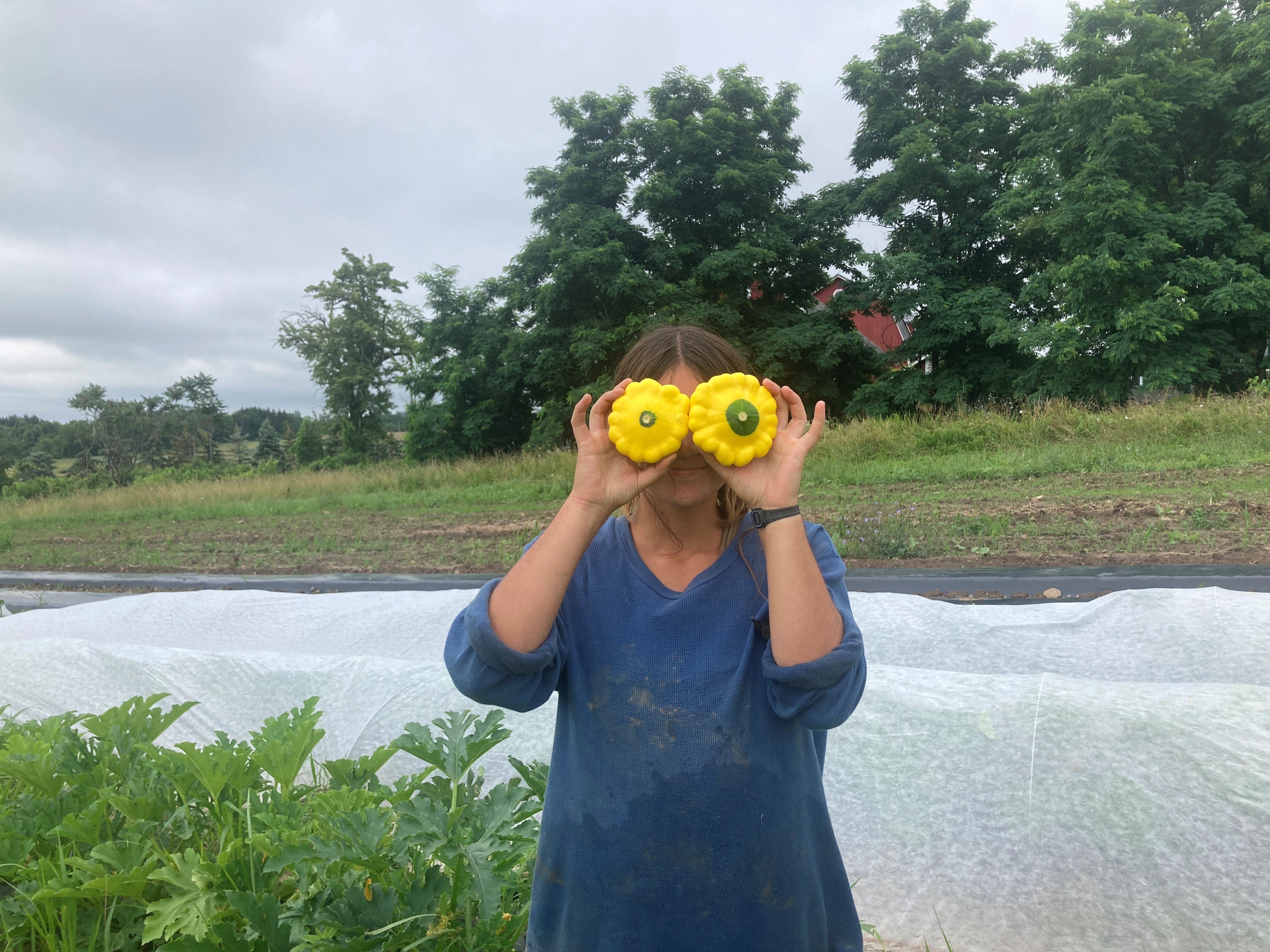
Farming has taught me a lot of these lessons. Looking back on seasons spent out in fields underneath the sun, I remember sweating uncomfortably into all of my clothes, feeling my body overheat despite a wide-brimmed straw hat attempting to provide me shade, my limbs feeling like lead after hours of wrestling weeds from the soil, or days spent bent over with my back towards the sky, snapping garlic scapes into a bucket hanging from my shoulder for what seemed like an eternity. I remember the feeling of fall closing in, stealing away the warmth of the sun and replacing it with an unavoidable chill (no matter how many hand warmers were stuffed into my gloves and boots)—when the wash room, where the shade and cool water of the wash tubs used to be a haven from the summer heat, was now the last place anybody wanted to be if they hoped to stay warm or didn’t want to feel like their fingers were about to freeze off. Market days were sometimes 18 hours straight of feeling like a professional weight-lifter, handling thousands of pounds of produce at least three times in the span of 24 hours—playing tetris loading crates full of hand-harvested vegetables into a box truck, unloading them all at market, and packing everything left back up again to return to the farm. Those days were non-stop, sometimes so busy that you could hardly register anything happening at all. No time for a break until after the sun had already set. That kind of tiredness is bone-deep, and sleep never felt as good as it did then.
I’m sure these don’t sound like fond memories, yet they are. Though I spent plenty of time cursing myself for choosing it, farming was the closest I ever felt to the Earth and her seasons. If you had asked me after being dive-bombed in the face by fat, blood-hungry deer flies every day for months if I felt harmonious, I would have said no. But feeling completely beholden to physical sensation, unable to deny the intrinsic connection of your body to the bodies of all others through the constant feedback from the world around you—this, for me, is the only way to live. In this state, you can only be present. The past and future don’t exist because all you can focus on is the way everything feels here and now. It’s as if everything else in life is a daydream, and the bite of a deer fly is like a pinch to snap you back to reality.
For every sweaty, uncomfortable experience that farming handed me, it also gave me some of the most magical moments in my life. When I think about times when I’ve felt my best, it always lines up with days I spent deliberately and confidently interacting with the world using my body.
Cycles are an inherent part of life, no matter where you look. Through each phase and completion of a cycle comes deep transformation and reemergence, over and over again. There is always joy and congratulations associated with transformation, but hardly anyone talks about the pain of rebirth. To be stripped of something you once held in your core, close to your heart, pried away from you whether you like it or not—this is also transformation. It’s uncomfortable, unfamiliar, cold.
This is the cliff I feel like I am at the edge of this winter. Transformative experiences are meant to break open our hearts and minds so that we can receive new and better things, or see the world in ways we’ve never considered before. Being creatures of habit, this can be one of the scariest realities to face when it pops up along our paths. In some cases, these changes are so drastic that they’re hard to miss; in other cases, they may be subtle shifts that require great amounts of patience and undivided attention to notice. In the latter case we may feel like we have a choice—to not pursue the change, to reject the unknown and continue on in familiarity—yet there is never a choice. Living means perpetually walking into the unknown. When we think we’ve reached a conclusion, the answer is always maybe. The unknown is inherently ungrounding, but I am tethered in the promise that warmth and abundance always returns after adversity, as long as I am willing to participate in both.
A friend of mine always says, “Be afraid but do it anyway.”
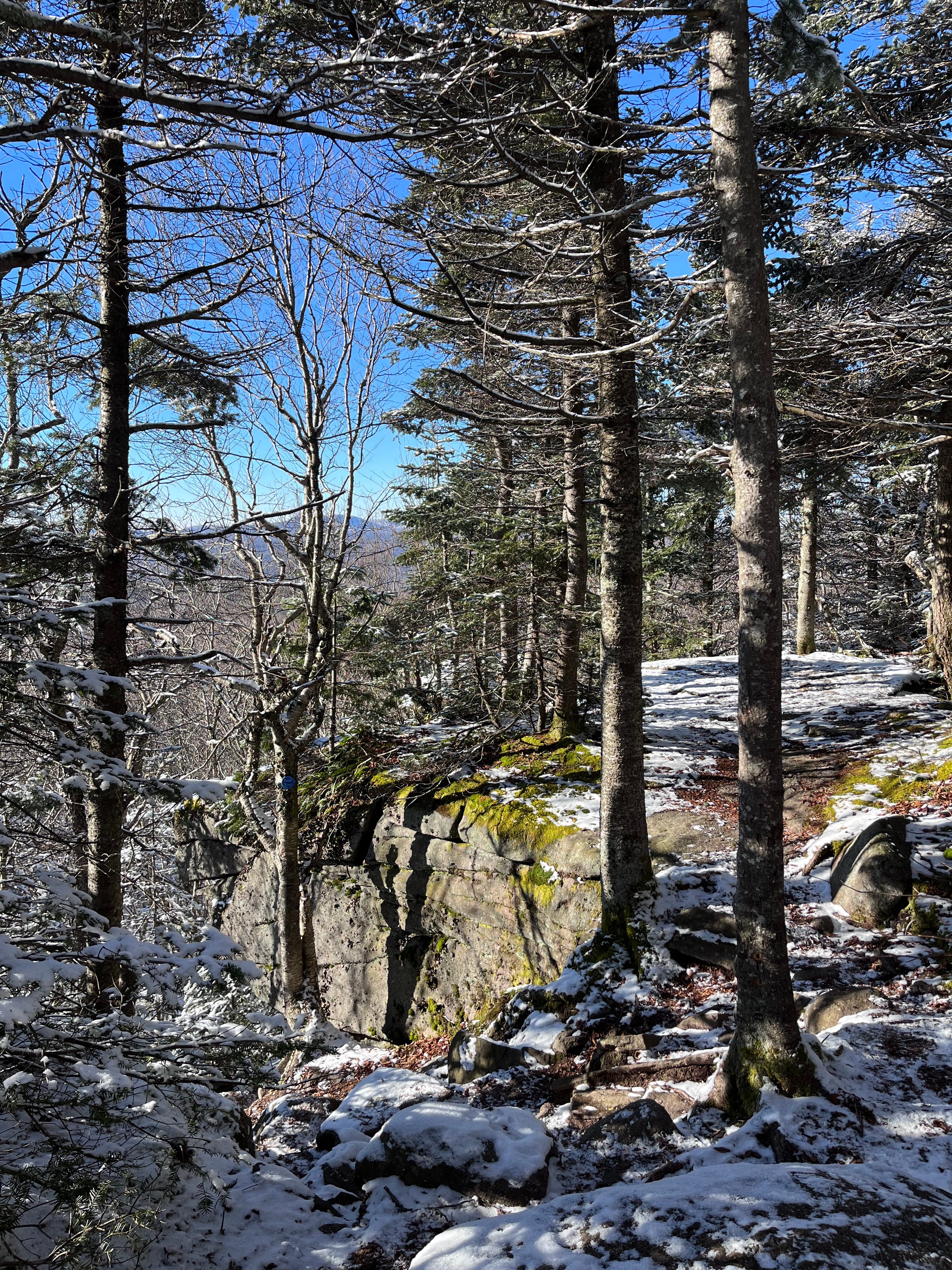
This is the first thing I read this morning still sleepy in bed and it's set such a raw tone for me I loved it very much